
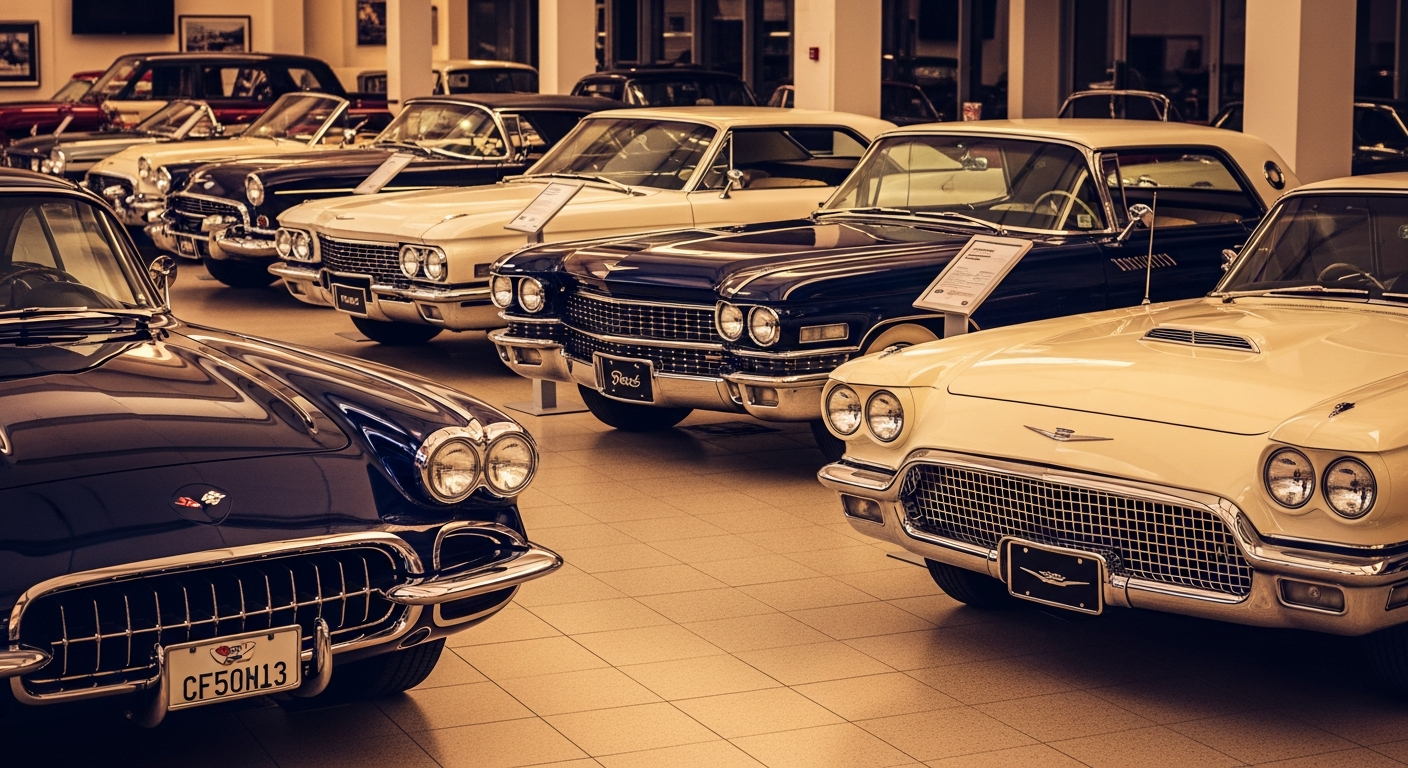
In an era where modern technology dominates the streets, vintage vehicles capture attention with their timeless charm. But what exactly makes these classic automobiles so fascinating? Why do people invest time, money, and passion in vehicles that are often older than themselves? Let's dive into the world of vintage cars.
What Are Vintage Vehicles Anyway?
The term "vintage" is often used synonymously with "classic car" or "antique car," but there are subtle differences. Generally, vehicles built between 1919 and 1930 are classified as vintage. However, in common usage, the term has expanded and today often encompasses all classic automobiles with historical value.
In Germany, a vehicle can receive an H-Kennzeichen (Historic License Plate) if it is at least 30 years old and in a largely original, well-maintained condition. This license plate brings tax advantages and serves as a quality seal for genuine classics.
History
Every vintage vehicle tells a unique story
Craftsmanship
True craftsmanship instead of mass production
Character
Individuality and personality in every detail
The Fascination: More Than Just Nostalgia
Craftsmanship and Authenticity
Vintage vehicles were built in an era when craftsmanship still took center stage. Every weld, every body panel, every engine was manufactured with precision and care. In contrast to today's computer-controlled mass production, you can feel the human hand behind every detail in a vintage car.
Take, for example, a 1967 Ford Mustang: the curved lines of the body, the chrome of the bumpers, the feel of the substantial steering wheel in your hands. All of this was designed and built when computers were still science fiction. This authenticity simply cannot be found in modern vehicles.
The Driving Experience
Driving a vintage vehicle is a completely different experience from a modern car. There are no driver assistance systems, no ABS, no power steering (in many models). Instead, you feel the road unfiltered, hear the engine roar without sound insulation, and every drive requires full attention and real driving skill.
This direct connection between driver and machine is what many enthusiasts seek. You're not a passenger of a computer on wheels, but the pilot of a mechanical machine that responds directly to every input.
Design and Aesthetics
The 1950s to 1970s were the golden age of automotive design. Extravagant fins, sweeping lines, massive chrome, two-tone paint jobs. Cars back then were rolling works of art. Designers like Harley Earl (GM) or Carroll Shelby created vehicles that are still considered design icons today.
A 1959 Cadillac Eldorado with its dramatic tail fins or a 1970 Plymouth Barracuda in Plum Crazy Purple. These cars were and are statement pieces. They represent a time when cars were not just means of transportation, but expressions of personality and status.
Vintage Vehicles as Investment
Beyond the emotional component, vintage vehicles are also interesting as investment assets. Prices for well-maintained or professionally restored classics have risen steadily over recent decades. Particularly rare models or limited editions now achieve record prices at auction.
An example: A 1967 Shelby GT500, which sold for about $4,200 in the 1960s, now reaches prices of $200,000 to over $500,000 at auction, depending on condition and documentation. That's a value increase of over 10,000% in about 50 years.
However, it's important to note: not every old car is automatically valuable. What matters are rarity, condition, originality, documentation, and historical significance. Professional advice from experts like Gatran Garage is therefore essential when looking to invest in vintage vehicles.
The Community: Shared Passion Connects
An often overlooked aspect of vintage car culture is the community. Classic car meets, rallies, car shows, and clubs bring like-minded people together. These events are more than just vehicle exhibitions. They are social gatherings where knowledge is shared, friendships are formed, and passions are lived out.
At our annual US-Car Meeting at Gatran Garage, we experience year after year how people from all over Southern Germany come together to share their love for American classics. Whether 18 or 80 years old, whether experienced restorer or newcomer. The fascination for vintage vehicles unites everyone.
Challenges: Care and Preservation
Owning vintage vehicles also means responsibility. These cars require regular care, expert maintenance, and sometimes extensive restorations. Replacement parts can be difficult to find and expensive. Modern workshops often lack experience with the old technology.
This is exactly where specialists like Gatran Garage come in. With over 30 years of experience in the restoration and maintenance of American classics, we know what matters. From the correct adjustment of a four-barrel carburetor to the professional restoration of a complete body. We have the expertise and passion for vintage vehicles.
Conclusion: Timeless Fascination
Vintage vehicles are more than just old cars. They are rolling history, works of art, investments, and above all, passion. In an increasingly digitized and standardized world, they offer authenticity, individuality, and a driving experience that cannot be found in any modern car.
Whether you're already a proud owner of a classic or still searching for your dream car. The fascination with vintage vehicles will accompany you for a lifetime. And if you need a partner who shares this passion and has the expertise to realize or preserve your dream, you're in the best hands at Gatran Garage.