
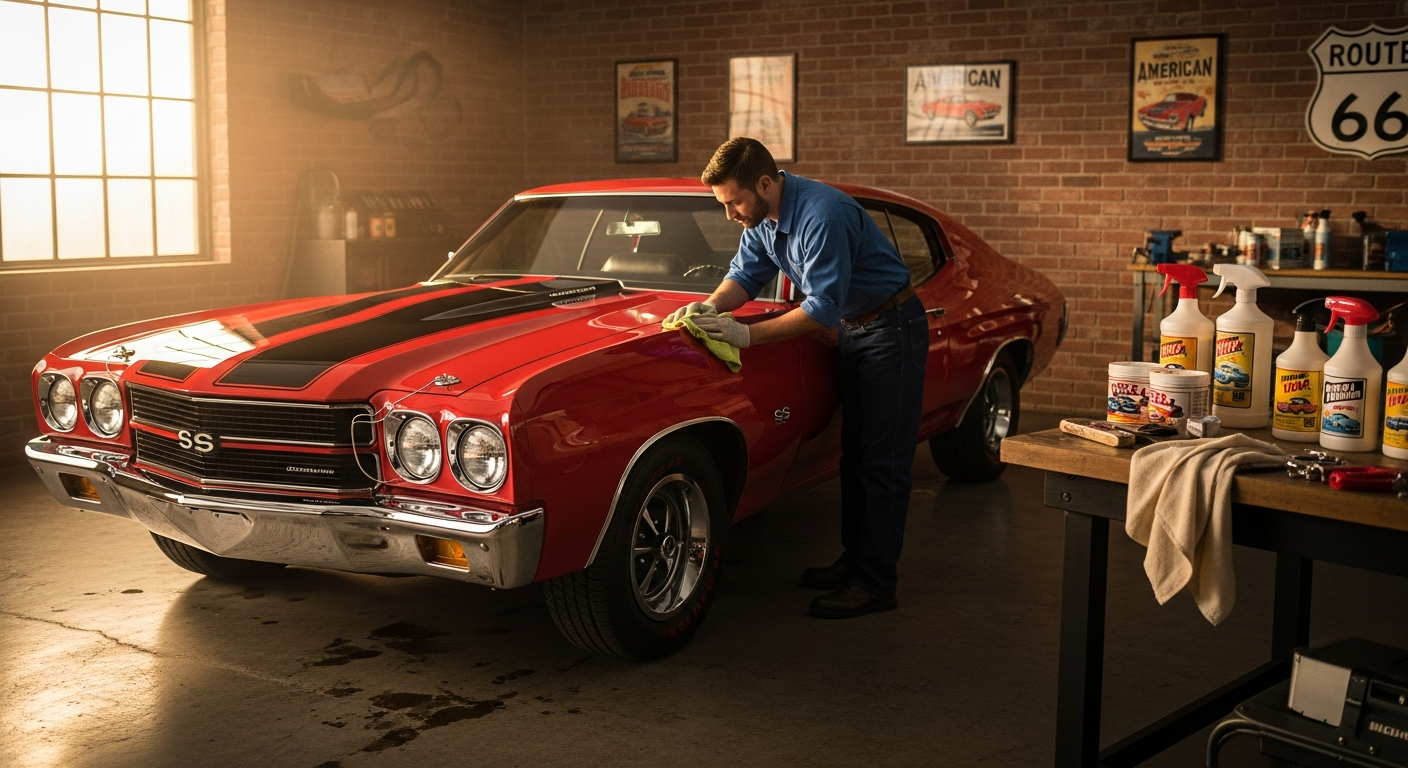
US vehicles and classic cars are not just means of transportation. They are rolling works of art, time machines, and investments. To maintain and increase their value, they require special, loving care. In this comprehensive guide, we share knowledge from over 30 years of experience with classic American automobiles.
Regular Maintenance
Consistent, professional maintenance is the key to longevity
Attention to Detail
Classic cars need more attention than modern vehicles
Engine Care. The Heart of Your Classic
Regular Oil Changes
Classic V8 engines often have less oil capacity than modern units and operate with larger tolerances. This makes regular oil changes even more important.
Recommendation: For classics that are driven regularly, the oil should be changed every 3,000-5,000 km or at least once a year. Even if you drive less. Oil ages even when the car is sitting!
Oil Selection: Use high-quality multi-grade oils. For classic engines with flat tappets (like many American V8s from the 60s and 70s), oils with ZDDP additives(Zinc Dialkyldithiophosphate) are recommended, which are often missing from modern oils but are essential for valve train protection.
Cooling System Maintenance
Overheating is a common problem with classic engines. Pay particular attention to the cooling system:
- Change coolant regularly. Every 2 years
- Check radiator for contamination. Inside and out
- Inspect hoses. Old rubber hoses become porous
- Test thermostat. Does it open at the correct temperature?
- Check water pump for leaks
Pro Tip: For older vehicles, consider upgrading to a modern aluminum radiator. These offer better cooling performance at lower weight.
Carburetor vs. Fuel Injection
Many classic US cars have carburetors. These require more attention than modern fuel injection systems:
- Check adjustment regularly (idle, mixture)
- Clean air filters frequently
- Inspect carburetor gaskets (they become brittle)
- During storage: drain fuel to prevent gumming
Transmission and Drivetrain
Automatic Transmission Care
Classic automatic transmissions (like TH350, TH400, C4, C6) are robust but not maintenance-free:
- Check transmission fluid level regularly. many old transmissions tend to leak
- Fluid change every 50,000 km. Often advisable earlier for classics
- Replace filter. Always renew filter during fluid change
- Ensure cooling. External transmission coolers are recommended
Differential Maintenance
The often-forgotten differential also needs attention:
- Check oil level (some classics leak here)
- Change oil every 50,000-100,000 km
- For Posi-Trac/Limited-Slip: use special additive
Brakes. Safety First
Classic brakes are often drum brakes all around or disc front/drum rear. They require more maintenance than modern systems:
- Change brake fluid annually. Old brake fluid absorbs water
- Check pads/shoes regularly. Wear is normal
- Inspect brake cylinders for leaks. Especially after storage periods
- Inspect brake lines. rust leads to dangerous leaks
Upgrade Option: Many enthusiasts convert to modern disc brakes. A sensible investment in safety and performance.
Electrical System. The Achilles Heel of Classic Cars
Battery Care
Old electrical systems with 6V or 12V are vulnerable. The battery needs special attention:
- Keep terminals clean. Corrosion prevents good contact
- During longer storage periods: disconnect battery or use maintainer charger
- Check fluid level (on serviceable batteries)
- Replace every 3-4 years. Even with minimal use
Alternator and Starter
Alternator (generator on very old models) and starter are critical components:
- Watch the charge indicator light. Warning sign for charging problems
- Check belt tension and condition
- Test alternator regularly (charging voltage should be 13.5-14.5V)
- Test starter for proper function
Suspension and Steering
Springs and Shock Absorbers
Classic suspension systems often use leaf springs (especially rear) and simple shock absorbers:
- Replace shock absorbers every 80,000 km. Worn shocks are often not immediately noticeable
- Inspect leaf springs for cracks
- Check rubber bushings regularly. They become hard and brittle over time
Steering
The steering of classic US cars is often generously sized but prone to wear:
- Check tie rod ends for play
- Check steering box for leaks (on power steering)
- Top up power steering fluid regularly
- Test steering damper (if equipped) for function
Body and Paint
Paint Care
The paint is not just aesthetics but also protection. Classic paints are often more delicate than modern ones:
- Regular washing. But not in direct sunlight
- Wax 2-3 times yearly. protects and preserves shine
- Polish dull areas. But carefully to avoid cutting through the paint
- Treat stone chips immediately. They become rust spots
Chrome Care
Many classic US cars have lots of chrome. Its care is specialized:
- Treat with special chrome polish products
- Never use aggressive cleaners
- For rust spots: aluminum foil with water. Works like a gentle abrasive
- Waxing also protects chrome from weather
Interior Care
Leather and Vinyl
Classic interiors often use genuine leather or vinyl:
- Treat leather regularly with leather conditioner. prevents drying and cracking
- Clean vinyl with special cleaners
- Use UV protection. Sun exposure is the biggest enemy
- During storage: cover the interior
Carpets and Headliner
Carpets and headliner also need attention:
- Vacuum regularly. Dirt acts like sandpaper
- Avoid moisture. leads to mold and rust
- Check headliner for sagging. have it re-glued in time
Tires and Wheels
Even though classic cars are often driven only occasionally, tires age:
- Replace tires every 6-8 years. Even with low mileage
- Check air pressure regularly. Especially before longer drives
- During storage: put on jack stands. prevents flat spots
- Keep wheels clean and waxed. Especially chrome wheels
Conclusion: Love and Consistency
Keeping a classic or US car in top condition requires regular attention, professional maintenance, and above all attention to detail. Modern cars forgive neglect. classics do so only to a limited extent.
But the reward is great: A perfectly maintained classic not only brings driving pleasure but also continuously increases in value. And the best part: You're preserving a piece of automotive history for future generations.
At Gatran Garage, we offer full-service maintenance for classic US vehicles. From routine inspections to complete restorations. We know every bolt of your classic and understand what matters. Trust over 30 years of experience with American automobiles.